


 Back
Back Lectures at university can be quite different from lessons at school and college, particularly when you are taught in a big group. This article is designed to explore this and help you get the most out of lectures.
Background
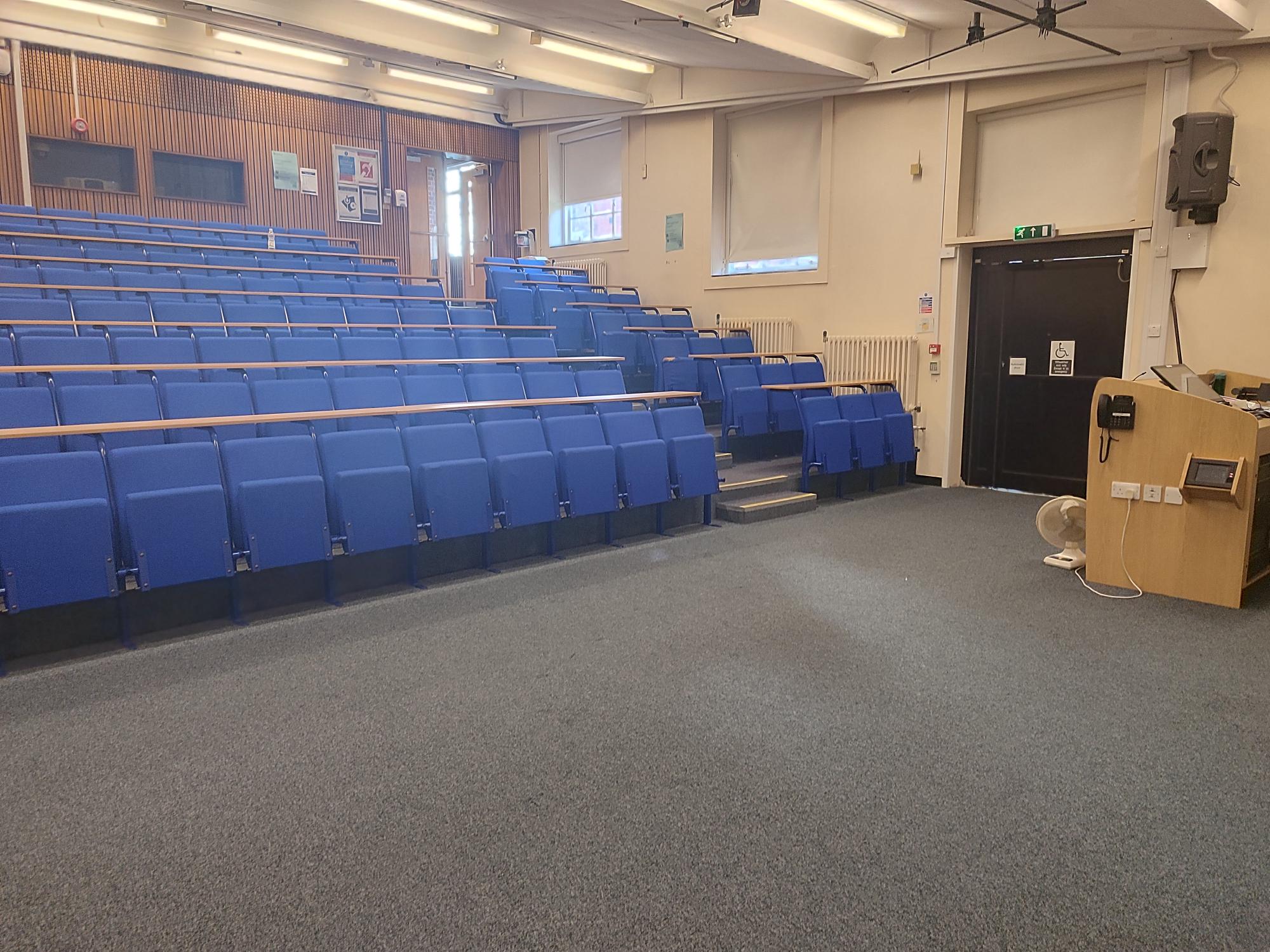
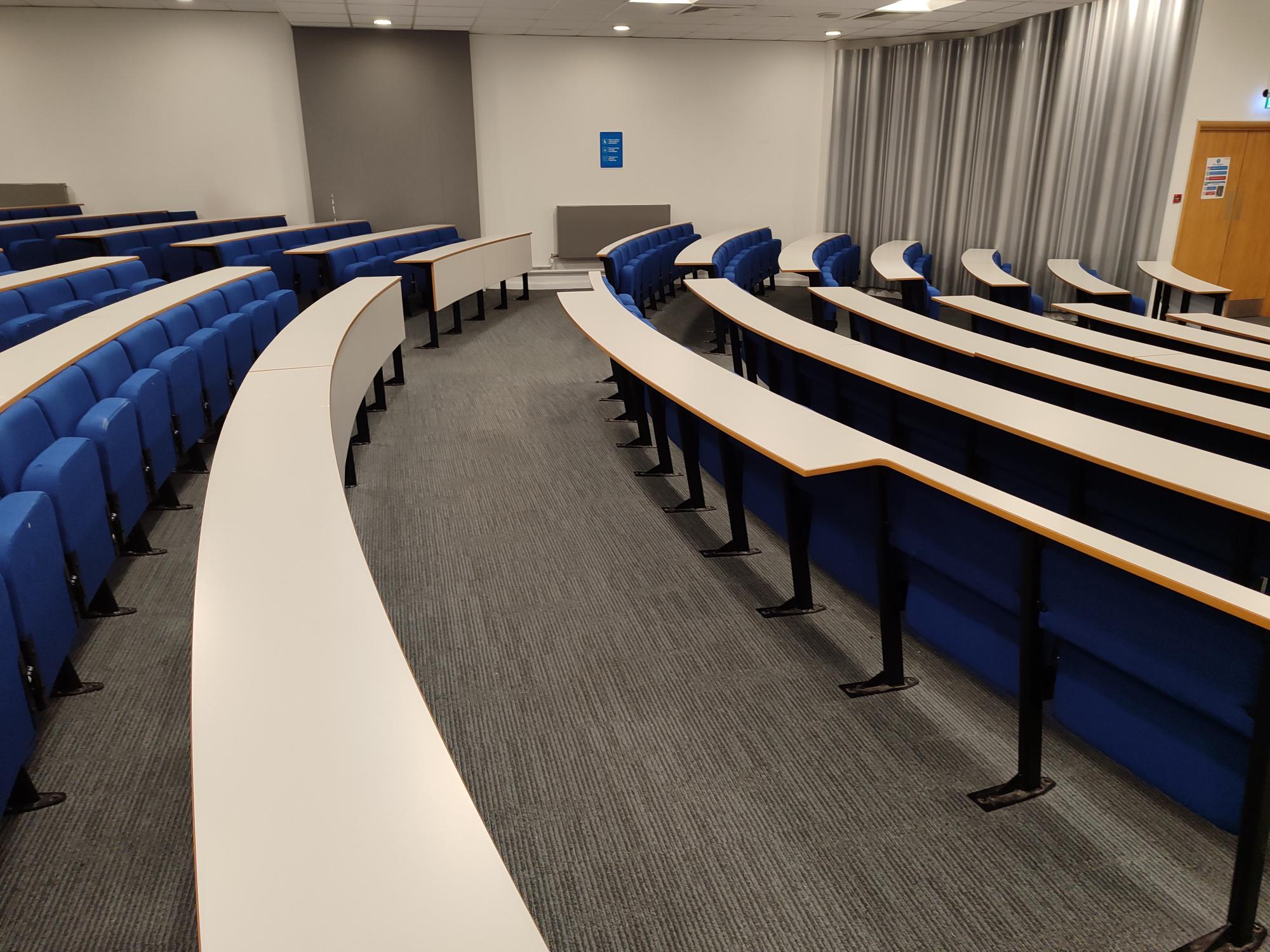
It is hard to know what a University lecture is like from the perspective of an Undergraduate student until you’ve been to one. Even if you’ve been to a public lecture or sample session as part of visiting your university, it’s not quite the same as the real thing because people behave differently at those events and you don’t often have to take notes.
How could this affect me?

Keeping up with note taking, being in a big group and dealing with sensory stimuli can be both challenging and exciting – just like the content of lectures themselves. Many students really enjoy lectures as it’s a chance to learn more about a subject you’re really interested in from an expert in your field.
What to do next?
Think about your coping skills
Practical tips
Making notes
- You can’t really write down everything that is said, even if you have amazing shorthand skills. Though developing your own shorthand and abbreviations isn’t a bad idea (see this Guardian article).
- PowerPoint slides are often uploaded to the module’s Blackboard page in advance of the session. Therefore, it can be helpful to download a copy of these to your laptop/ipad if you have one of these devices and can bring to the lecture. You can then add comments to the ‘notes’ section of the slides. Printing the slides off is also an option you’d prefer to handwrite notes on a printed copy. This is likely to be more efficient than re-writing the exact content of the slides.
Remember: you may be entitled to support from the Disabled Students’ Allowance. Sometimes they can recommend an entitlement for ink and paper. Please email studenthub@soton.ac.uk if you’d like more support with this/have any questions about the support you may be entitled to.
- Try to write what you think about the contents of the lecture, reflectively, as well as the main points of what is said.
An autistic student from the University of Southampton shared that they will often read slides before a lecture. Sometimes they will make notes on these slides ahead of the lecture, but not always. They may not know what notes they need until certain things are explained during the lecture. The student also shared that they found a Learning Support assistant to provide notetaking really helpful.
Students may be referred for Learning Support by a Specialist Practitioner in the Student Disability and Inclusion Team, if deemed suitable. If you have any questions about the support you are receiving or would like to discuss support, please email studenthub@soton.ac.uk.
- Mind mapping, either via software on your laptop or drawn by hand, can be a really useful way of showing how ideas are linked and might suit your way of thinking better than writing down full paragraphs or even bullet points. Students registered with Student Disability and Inclusion can access Assistive Technology Facilities. Follow this link to read more about AT facilities at the University of Southampton.
Timing
- Lectures don’t always start on time, but it’s better to assume that they will. If you can, it can be helpful to arrive around 5 minutes early when you are first attending lectures. This means you can then take some time to find a seat that is right for you and can get settled before it begins.
- Sometimes being late is unavoidable – while some lecturers don’t allow latecomers, they should tell you in advance if this is the case. Just come in as quietly as you can – it might feel intimidating at the time, but most people are not going to mind and it’s better not to miss out completely. The same if you need to leave earlier than planned.
- Other students may well arrive late or need to leave early themselves. This can be distracting, but it’s okay to do this at university, as everyone has things going on outside the course.
- If you arrive too early for your session, the previous lecture may still be going on, and/or you can get caught in the crowd of people leaving. If you can, spend some time around your lecture theatres close to lecture changeover time and familiarise yourself with the timings and where entrances and exits are
- If you have time, go to the loo first! It sounds obvious and embarrassing, but lectures are often two or three hours long and not all of them have breaks (and if they do, there can be queues). Of course, you would be welcome to take rest breaks at any point throughout a lecture. However, this can be a helpful tip if you don’t want to be thinking about it throughout the session or having to run out at the end.
- If you are one of the first people into the lecture theatre, you can choose where to sit – you might like to sit on the end of a row near the aisle so you can get out quickly if you need to leave.
“I left lectures, if the commotion became unbearable.” (student, Autism&Uni surveys)
If sitting near the front helps you to concentrate, grab a seat there.
Signing in
Lectures and seminars may have sign-in sheets to monitor attendance. At the University of Southampton, an app called ‘MyEngagement’ is used. Once a student arrives at the teaching session, they can register attendance on the app or by scanning a QR code. If you don’t catch it during the lecture, go to the front of the lecture theatre or seminar room at the end. Or, you can email the lecturer after to explain. Teaching staff can update this.
Find out more about the MyEngagement App and how to download it.
Question time
- There will often be an opportunity to ask questions in a lecture – either the lecturer will ask if there are any questions during the session or there will be specific time left aside for this at the end. Write your question down and save it for later.
- This space is designed to ask questions where most people would benefit from the answer. E.g. a question in relation to the academic content of the lecture. This is quite hard to get to grips with. It doesn’t mean you can’t ask things that are more personal to you and your understanding of a topic or assignment, it’s just that you need to either ask privately at the end of the lecture, email your lecturer or arrange an appointment with them.
Telling the lecturer about your autism
“In first year I missed a lot of lectures and also would sometimes have to leave during one as I would have severe anxiety due to having to sit surrounded by people, not moving and often in a room with no windows and unnatural light. Lecturers were aware this could be the case and so did not mind and knew I was not being rude.” (Fern, final year student, Autism&Uni interview)
If during your time at University you meet with the Student Disability and Inclusion team, it is likely that a Student Support Recommendations document (SSR) will be produced for you. This will outline your diagnosis, how it impacts you and recommendations for support during your time at University. This is shared on a need to know basis with academic colleagues (e.g. your lecturers).
As lecturers will teach a large number of students during your time at University, it may also be beneficial to tell your lecturers (in person or via email) that you are autistic and how it affects you – even if you think they already know. Read the rest of Fern’s interview and the toolkit section on Telling people at university about your autism, if you haven’t already done so.
Questions to think about
- Do you prefer to read handouts online or on paper?
- What helps you to focus on someone speaking, like a lecturer, when a lot is going on?
- Do you feel comfortable asking the lecturer to use the microphone if everyone else says they’re OK without it or the lecturer starts speaking quietly?
- If you need to leave a lecture early, either because you have an appointment or you need to go somewhere quiet for a while, how will you sort that out in advance?
- Do your lecturer and fellow students know that you are autistic? Do you think it might help if they did know?
About the author
Original article published by Autism&Uni on 15th December 2015. Updates made by Beth Lawson (University of Southampton, March 2024).